Note on controversy
The Codex is both an irreplaceable Nahua archive and a tool of evangelization. Treat it as a colonial mediation—not as a neutral field guide to living practice.
Life
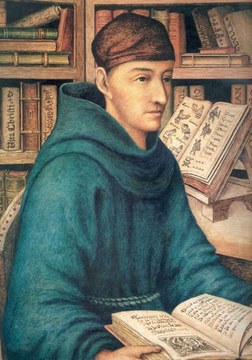
Bernardino de Sahagún (c. 1499–1590) was a Franciscan missionary-scholar in New Spain who supervised the bilingual Nahuatl–Spanish encyclopedia now called the Florentine Codex (Historia general de las cosas de Nueva España). It remains a foundational published source for Mesoamerican religion, calendrics and daily life—read critically as a colonial project. ORDL files him as a literature card. This page never recommends reconstructed Aztec rites.
The system
- Missionary ethnography as a bilingual encyclopedia
- Calendrics, gods and social life in Nahua testimony filtered by colonial editors
- ORDL boundary: textual history only—no rite reconstruction
Key works
- Florentine Codex / Historia general de las cosas de Nueva España
- Related doctrinal and linguistic works from the Colegio de Santa Cruz
Where to start
- Use modern critical editions and introductions before excerpting gods lists
- Pair with Indigenous and Mexican scholarship that situates the Codex
Ask Orin
A question to start with. It opens in Orin ready to edit; nothing is sent until you press Send.
How should readers weigh Nahua voices inside a Franciscan colonial encyclopedia?Ask Orin this question