
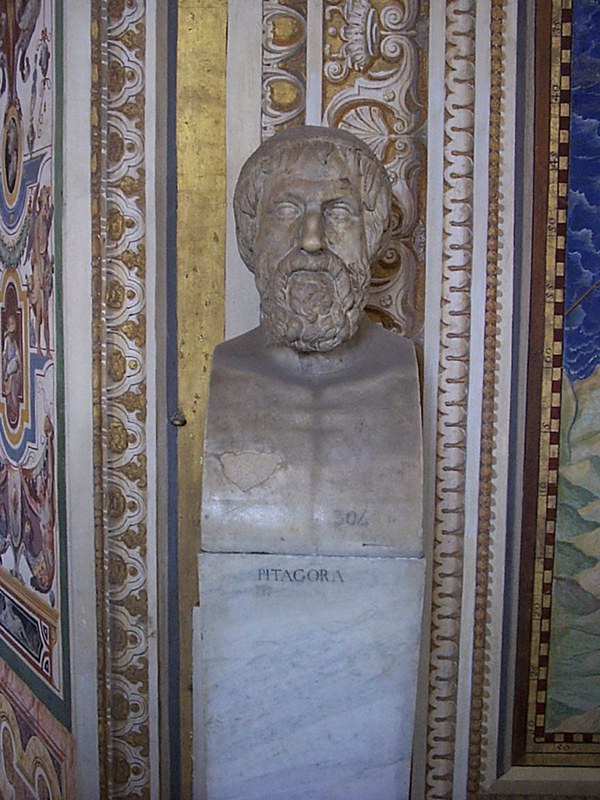
Life
Ancient sources place Pythagoras on Samos and later in Croton in southern Italy, where a communal school practised silence, shared life and study of number and music. Little that is securely his own writing survives; later Platonists and Neopythagoreans shaped the legend of travels to Egypt and Babylon and of the tetractys and cosmic harmony. Modern scholarship treats many miracle stories cautiously while recognising the school’s lasting influence on mathematics, music theory and Western esoteric number lore.
The system
- Number as the structure of cosmos and soul.
- Harmony / music of the spheres as ethical and cosmic order.
- Communal discipline (silence, shared life) as a path of purification.
Key works
- No securely authentic works survive; tradition via later writers (e.g. Iamblichus, On the Pythagorean Life)
- Tetractys and number lore as reported by Aristotle and Neopythagoreans
Where to start
- Stanford Encyclopedia of Philosophy: Pythagoras
- Iamblichus, On the Pythagorean Way of Life (historical legend; read critically)
Ask Orin
A question to start with. It opens in Orin ready to edit; nothing is sent until you press Send.
What did the Pythagoreans mean by saying that number structures both cosmos and soul?Ask Orin this question