
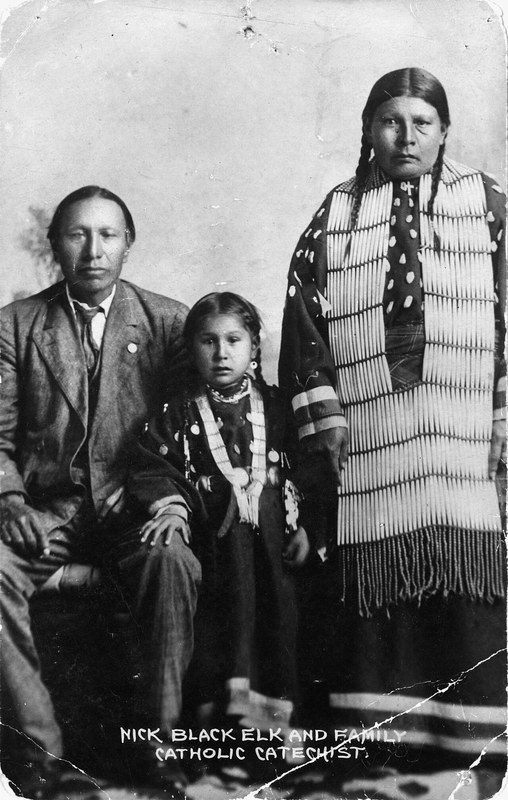
Note on controversy
Black Elk Speaks is a mediated text. Using it to sell ceremonies, ‘shamanic workshops’ or pan-Indian spirituality violates ORDL’s indigenous-literature rules (neutral + sourced; no rite sales).
Life
Nicholas Black Elk (Heȟáka Sápa, 1863–1950) was an Oglala Lakota wičháša wakȟáŋ whose visions and life entered global print mainly through John G. Neihardt’s Black Elk Speaks (1932) and later Joseph Epes Brown’s The Sacred Pipe. Mediation, editing and Catholic catechist dimensions are heavily debated. ORDL lists him under North American Indigenous spiritualities as literature with source caveats—never as a pan-‘Indian’ rite brand or ceremony for sale.
The system
- Vision narrative and Lakota ceremonial memory in mediated English prose.
- Later Catholic life complicating neat ‘pure tradition’ readings.
- ORDL boundary: contested text—no sweat-lodge tourism or pan-Indian packaging.
Key works
Como Associado da Amazon, a ORDL ganha com compras qualificadas. Os links abrem a Amazon.com; o preço para você é o mesmo.
Where to start
- Read Black Elk Speaks beside scholarship on Neihardt’s editing
- Prefer Lakota and Indigenous historians’ contextual essays
Ask Orin
A question to start with. It opens in Orin ready to edit; nothing is sent until you press Send.
What is lost—and what is gained—when a Lakota vision life becomes an English literary classic?Ask Orin this question