
Note on controversy
Popular Western Rumi often detaches verses from Islamic and Mevlevi context. For study, prefer translations and biographies that keep Qur’anic and tariqa frames visible.
Life
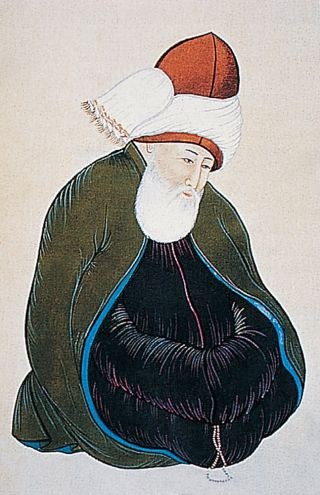
Jalāl al-Dīn Muḥammad Rūmī was a 13th-century scholar and Sufi who lived much of his life in Konya (in today’s Türkiye). After meeting the wandering dervish Shams of Tabriz, his teaching turned intensely to love poetry and the path of fanāʾ (annihilation of the ego in God). His Mathnawī and lyric Dīwān became central texts for Mevlevi and wider Sufi culture. Popular English versions sometimes soften Islamic and sharīʿa context; ORDL presents him as a literary and historical Sufi figure, not a generic “spiritual coach.”
The system
- Love (ʿishq) as the motor of the path to God.
- Fanāʾ and baqāʾ: dying to self, subsisting in God.
- Poetry and samaʿ (listening) as vehicles of remembrance—within Islamic Sufi frames.
Key works
- Mathnawī-yi Maʿnawī Amazon · Barks selection
- Dīwān-e Shams-e Tabrīzī
- Fihi ma Fihi (Discourses)
Como Asociado de Amazon, ORDL gana con las compras que cumplen los requisitos. Los enlaces abren Amazon.com; el precio para ti es el mismo.
Where to start
- A complete scholarly Mathnawi translation (e.g. Nicholson) rather than only quote anthologies
- A short introduction to Sufism that keeps Qur’anic and tariqa context
Ask Orin
A question to start with. It opens in Orin ready to edit; nothing is sent until you press Send.
How does Rumi’s idea of love relate to fanāʾ—annihilation of the ego in God?Ask Orin this question